


jk4 | Exploring the World of Strategy Games: A Deep Dive into the 'jk4' Category
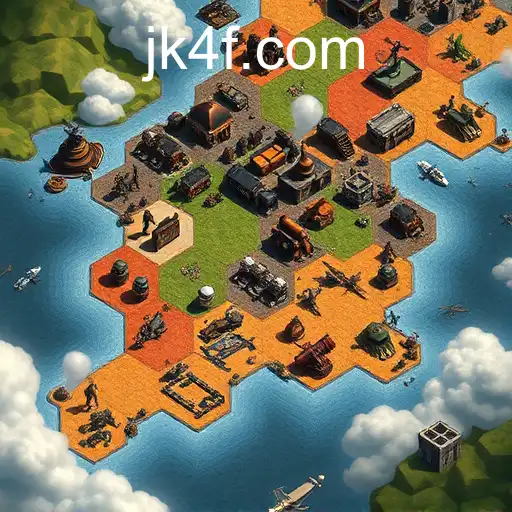
In the vast and ever-evolving landscape of gaming, strategy games hold a unique and crucial space, captivating the minds and skills of millions around the globe. Under the keyword 'jk4', strategy games have carved out a niche for being intellectually stimulating and immensely rewarding. This article embarks on a journey to unravel the complexities and the charm of these games, exploring their significance in the digital realm and the unique experiences they offer to gamers.
Strategy games focus on skillful planning to achieve victory, requiring players to make thoughtful decisions that can have lasting impacts on the game's outcome. Traditionally, these games are turn-based, real-time, or a blend of both, providing a platform for players to think ahead and execute intricate maneuvers. From historical recreations to futuristic battles, the spectrum of strategy games is as diverse as it is expansive.
One of the key attractions of the 'jk4' strategy game category is the intellectual challenge it poses. Unlike fast-paced action games that test reflexes and quick thinking, strategy games demand patience, cunning, and foresight. They require players to manage resources, build and fortify bases, and often, to lead armies. These elements not only entertain but also sharpen cognitive abilities and strategic planning.
Games like 'Civilization', 'Starcraft', and 'Age of Empires' have popularized strategy gaming, each offering distinct worlds where strategy reigns supreme. These games immerse players in scenarios where every decision can tip the scales between defeat and triumph. For instance, in 'Civilization', players start with a small tribe and aim to develop an empire that stands the test of time, a journey filled with diplomacy, culture, and industrial prowess.
But what truly distinguishes 'jk4' strategy games is their ability to simulate real-life decision-making processes. Within these virtual environments, players often tackle complex problems requiring multilayered solutions. This provides not only entertainment but also a valuable exercise in strategic thinking applicable in real-world situations.
Beyond the conventional gaming experience, strategy games under the 'jk4' keyword often include multiplayer modes, facilitating robust communities where players can engage, compete, and collaborate. The competitive aspect brings an extra layer of depth and excitement, as players pit their strategies against others', frequently leading to dynamic and unpredictable outcomes.
As we delve deeper into the technological era, the future of strategy games is shimmering with possibilities. Advancements such as artificial intelligence and machine learning are set to amplify game mechanics and realism. With such innovations, the 'jk4' category is poised to evolve, attracting new generations of gamers intrigued by the cerebral nature of strategy games.
In conclusion, strategy games hold an irresistible allure for players who crave a challenge of the mind. They blend entertainment with intellect, providing a platform that tests a player's ability to strategize, manage, and conquer. Whether navigating the complexities of empire-building or the tactical nuances of battle, the world of strategy games remains an ever-engaging domain, constantly requiring players to learn, adapt, and thrive.
